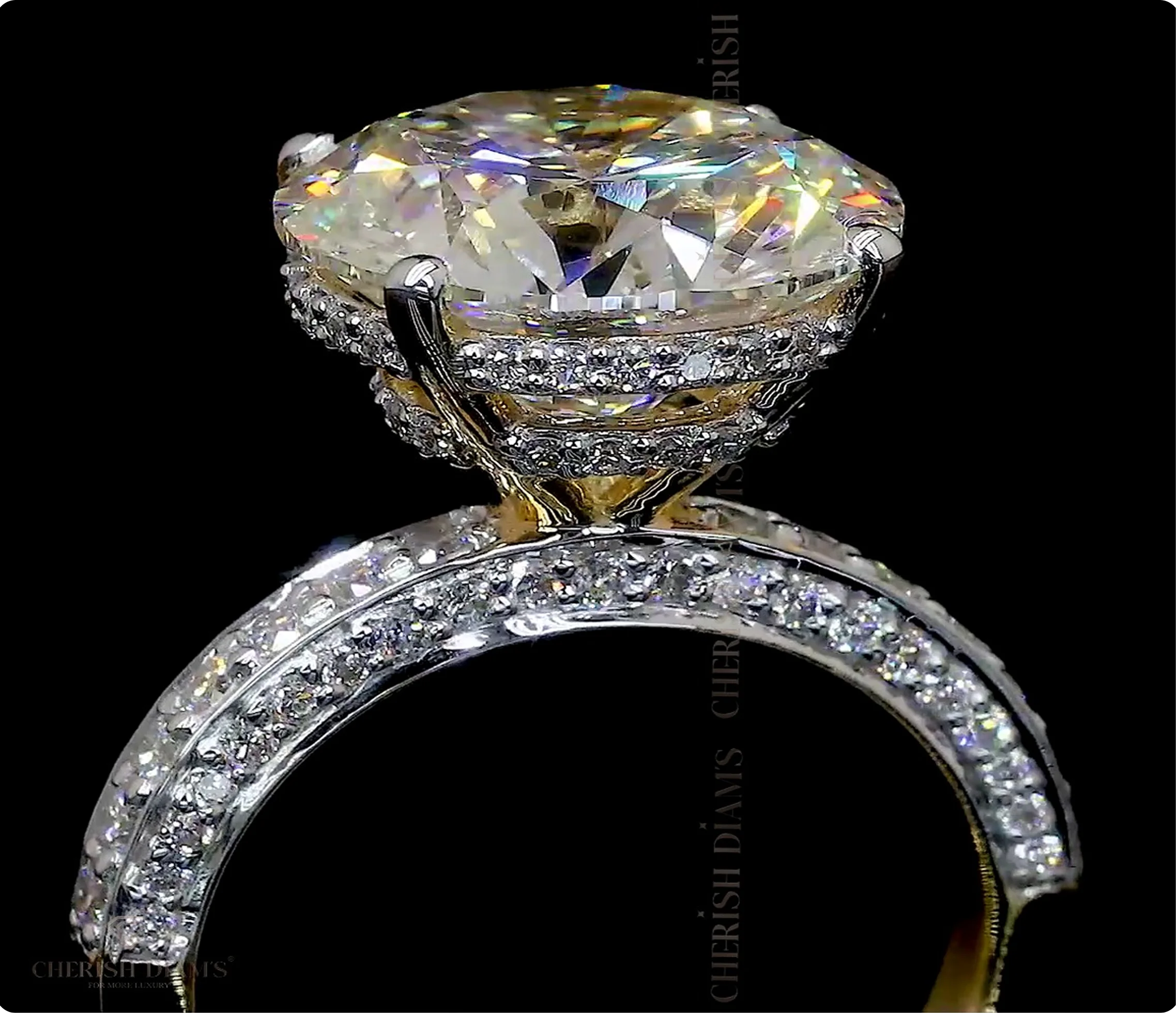
Seed Preparation
High-quality diamond seeds are carefully selected and prepared.
Lab-grown diamonds are real diamonds created in controlled laboratory environments using advanced technological processes that mimic the natural diamond formation process. These diamonds possess the same physical, chemical, and optical properties as mined diamonds, consisting of pure carbon atoms arranged in a crystal lattice structure.
Created through either High Pressure High Temperature (HPHT) or Chemical Vapor Deposition (CVD) methods, lab-grown diamonds are chemically identical to natural diamonds and exhibit the same brilliance, fire, and scintillation that make diamonds so captivating.
From Seed to Stone
High-quality diamond seeds are carefully selected and prepared.
Seeds are placed with a carbon source inside a specialized chamber.
Controlled heat, pressure or plasma builds the diamond crystal.
The rough diamond is carefully extracted, inspected and prepared.
The HPHT method replicates natural diamond formation by subjecting carbon to extreme conditions. A diamond seed is placed in a chamber with carbon source material, then subjected to pressures exceeding 1.5 million pounds per square inch and temperatures of 2,700-3,000°F. Metal catalysts help facilitate the carbon crystallization process. Growth occurs over 2-6 weeks, with larger diamonds requiring longer periods.
The CVD process begins with a diamond seed placed in a vacuum chamber. Hydrocarbon gases (typically methane) are introduced and heated to 1,500-2,000°F using plasma or hot filament activation. Carbon atoms separate from the gas and deposit onto the seed in crystalline layers, building the diamond atom by atom. This method offers precise control over diamond characteristics and can produce exceptionally pure stones over 4-12 weeks.
Throughout the growth process, advanced monitoring systems track temperature, pressure, and gas composition. Skilled technicians make real-time adjustments to optimize crystal quality. Growth chambers are maintained in ultra-clean environments to prevent contamination that could affect diamond purity and color.
Why Choose Lab-Grown
Lab-grown diamonds offer 30-50% savings compared to natural diamonds of equivalent quality, allowing you to maximize your budget for size and quality.
Created without mining, lab-grown diamonds have a significantly lower environmental impact and carbon footprint.
A completely transparent supply chain ensures conflict-free diamonds with no concerns about mining practices.
The controlled creation process often results in diamonds with fewer inclusions and better consistency than natural stones.
Advanced technology allows precise control of colors, sizes and characteristics to meet your exact preferences.
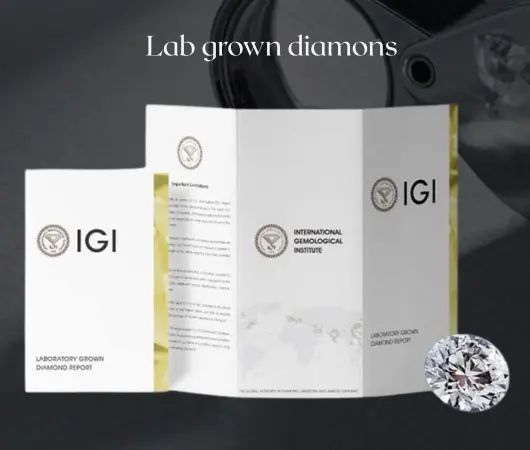
Graded by prestigious institutions such as GIA and IGI using standards identical to those applied to natural diamonds.
From Concept to Craft
CAD modeling and wax prototypes bring each original design to life.
Precious metals are carefully refined and prepared for casting.
Metal is cast or fabricated into precise jewelry components.
Diamonds are precisely set and every component is assembled.
Master Craftsmanship
The most popular method, using metal prongs to hold the diamond while allowing maximum light exposure. Master setters carefully bend and shape prongs to secure the stone without damage.
A metal rim completely surrounds the diamond's perimeter, offering excellent protection while creating a sleek, modern appearance. Precise fitting ensures complete security.
Multiple small diamonds are set closely together with minimal metal showing. Tiny metal beads or prongs hold each stone, creating a continuous sparkle effect.
Diamonds are placed in a metal channel with no metal separating the stones. This technique requires extreme precision for even spacing and a secure fit.
Master the intricacies of the 4Cs, understand GIA certification, and discover our commitment to ethical sourcing. A curated resource for the discerning collector.
The most critical factor determining a diamond's brilliance and fire. Our atelier selects only Excellent and Ideal cuts.
Evaluating the absence of color. We specialize in colorless (D-F) and near-colorless (G-I) ranges for maximum purity.
Assessing internal inclusions and external blemishes. We focus on VS2 clarity or higher, ensuring visual perfection.
The physical weight of the diamond. We guide you to balance size with quality for a breathtaking final piece.
Certification
Every diamond in our atelier is accompanied by a grading report from the Gemological Institute of America (GIA). This independent certification guarantees the exact specifications of your stone, providing absolute transparency and confidence in your investment.
View our collection